

CDM regulations for small builders: what you legally need to do
CDM regulations for small builders: what you legally need to do
The Construction (Design and Management) Regulations 2015, known as CDM 2015, is the main health and safety legislation for the construction industry. Many small builders assume it only applies to large commercial projects. That is not the case. CDM applies to virtually every construction project in the UK, including small domestic jobs, extensions and refurbishments.
What is CDM 2015?
CDM 2015 replaced the earlier CDM 2007 regulations. Its aim is to improve health and safety in construction by making sure those who commission, design and build construction work think about health and safety from the start. CDM applies to all construction work including building, alteration, conversion, fitting out, repair, maintenance, redecoration, decommissioning and demolition of structures.
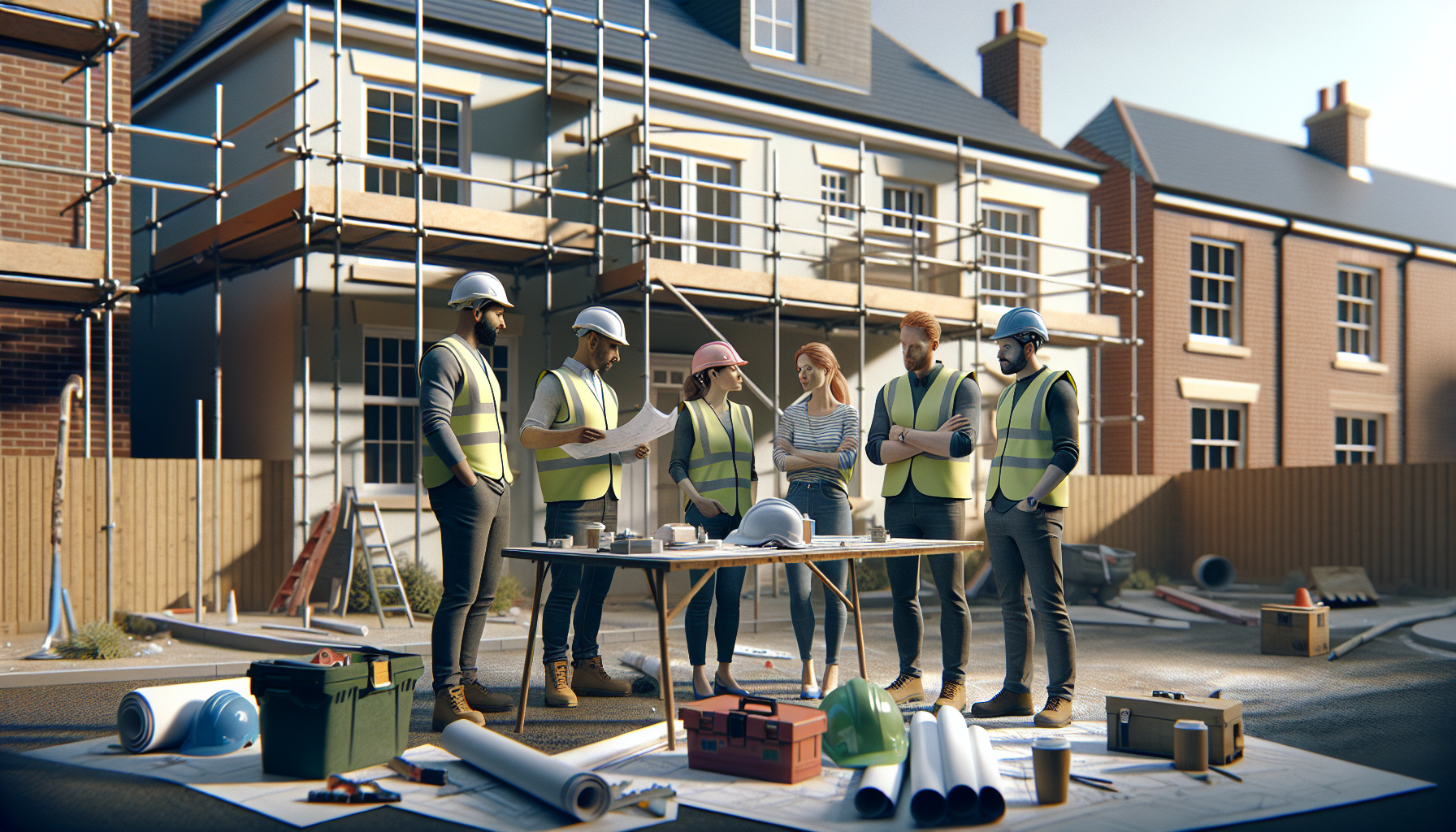
The duty holders under CDM 2015
Client: The person or organisation for whom the work is carried out. On domestic jobs, the homeowner is normally the client. Clients must make suitable arrangements for managing the project.
Designer: Anyone who prepares or modifies designs for construction work, including architects, engineers and tradespeople who design elements of their own work. Designers must consider construction phase risks in their designs.
Principal designer: On projects involving more than one contractor, a principal designer must be appointed to coordinate health and safety during the pre-construction phase.
Principal contractor: On projects involving more than one contractor, a principal contractor must be appointed. They are responsible for health and safety on site during the construction phase and for producing the construction phase plan.
Contractor: Anyone who carries out construction work, including sole traders. All contractors must plan, manage and monitor their own work.
When does a project need to be notified to the HSE?
A project must be notified to the HSE if it is likely to last more than 30 working days with more than 20 workers simultaneously on site at any point, or exceed 500 person days of work. Most small domestic jobs will not meet these thresholds. But even non-notifiable projects still have CDM duties.
What small builders need to do on non-notifiable projects
Even without HSE notification, CDM 2015 requires on any project involving more than one contractor: the client must appoint a principal designer and principal contractor in writing; the principal contractor must produce a construction phase plan before work starts; the principal designer must produce a health and safety file. On domestic projects where the homeowner does not appoint a principal designer, the principal contractor takes on those duties.
The construction phase plan
The construction phase plan (CPP) is the key document for CDM compliance. It must be in place before work begins. For a small domestic project, the CPP should cover: description of the project and site; management structure and who is responsible for health and safety; site rules (access, housekeeping); how health and safety information will be shared; the main hazards and how they will be managed (working at height, manual handling, electrical safety, asbestos, noise, dust); welfare facilities (toilets, washing facilities, somewhere to rest and eat); emergency procedures and first aid arrangements; arrangements for coordinating subcontractors.
The HSE has a free CPP template on their website. For most small domestic projects, two to four pages is sufficient. The point is not length but that it has been thought through before work starts.
Asbestos
On any project involving buildings built before 2000, asbestos is a major CDM consideration. Before work starts on walls, ceilings, floors or any element that may contain asbestos, you must: ask for any existing asbestos management plan or survey; carry out a visual check before any work that may disturb materials; have suspect materials surveyed by a licensed surveyor if there is doubt. Disturbing asbestos-containing materials without taking the right precautions is illegal and can result in criminal prosecution.

Welfare facilities
CDM requires suitable welfare facilities during construction work. On longer projects this means proper toilet facilities, somewhere to wash hands, somewhere to rest and eat, and somewhere to change clothing. On short domestic jobs, many builders use the client facilities by agreement. On site-based work without property access, you need to arrange your own welfare facilities.
Consequences of not complying
CDM is enforced by the HSE. Inspectors can issue improvement notices, prohibition notices (stopping work immediately) and prosecute individuals and businesses. Fines for CDM breaches have no upper limit in the Crown Court. For persistent or serious breaches, custodial sentences are possible. More practically, failure to have a construction phase plan means you are not in control of the project. Accidents are more likely, claims are more likely, and your insurance may not pay out if you were not complying with your legal duties.
FAQ
Does CDM 2015 apply to small domestic jobs?
Yes. CDM applies to all construction work regardless of size, including small domestic extensions, renovations and refurbishments. The level of documentation required is proportionate to the size and risk of the project.
Do I need to notify the HSE for every project?
No. You only need to notify if the project will last more than 30 working days with more than 20 workers simultaneously on site, or exceed 500 person days. Most small domestic projects do not meet these thresholds.
What is the minimum I need to produce for a small CDM project?
You must have a construction phase plan before work begins. On very small single-contractor projects, two to four pages covering key hazards, welfare arrangements and emergency procedures is sufficient.
Who is responsible for CDM on a domestic job?
If there is only one contractor, that contractor takes on CDM responsibilities. If there are multiple contractors, the client must appoint a principal designer and a principal contractor, or the principal contractor takes on both roles on domestic projects by default.
Where can I get a free construction phase plan template?
The HSE provides a free template at hse.gov.uk/construction/cdm/2015/construction-phase-plan.htm. It is straightforward to complete for small domestic projects.
Ready to get started?
InvoiceAdept helps UK tradespeople send invoices, track payments, and stay compliant — all from one place.
Start for freeNo credit card required