

How to start a damp proofing business UK
How to start a damp proofing business UK
Damp doesn't go away in a downturn. In fact, when homeowners stop moving and start maintaining the properties they already own, remedial trades like damp proofing often get busier. The UK's housing stock is old — millions of properties were built before modern damp proofing standards existed — and rising damp, penetrating damp, and condensation issues affect properties of all ages and values.
For someone willing to put in the time to learn the trade properly, starting a damp proofing business is a serious option in 2026. The barriers to entry are lower than for other specialist trades, the work is available across the country, and the ability to diagnose and treat a damp problem correctly — rather than mask it — commands a genuine premium over cowboys who sell unnecessary treatments.
This guide covers what you need: qualifications, equipment, pricing, finding customers, and running the business properly.
What does a damp proofing business actually do?
Damp proofing covers a range of services that are often sold together or by the same contractor:
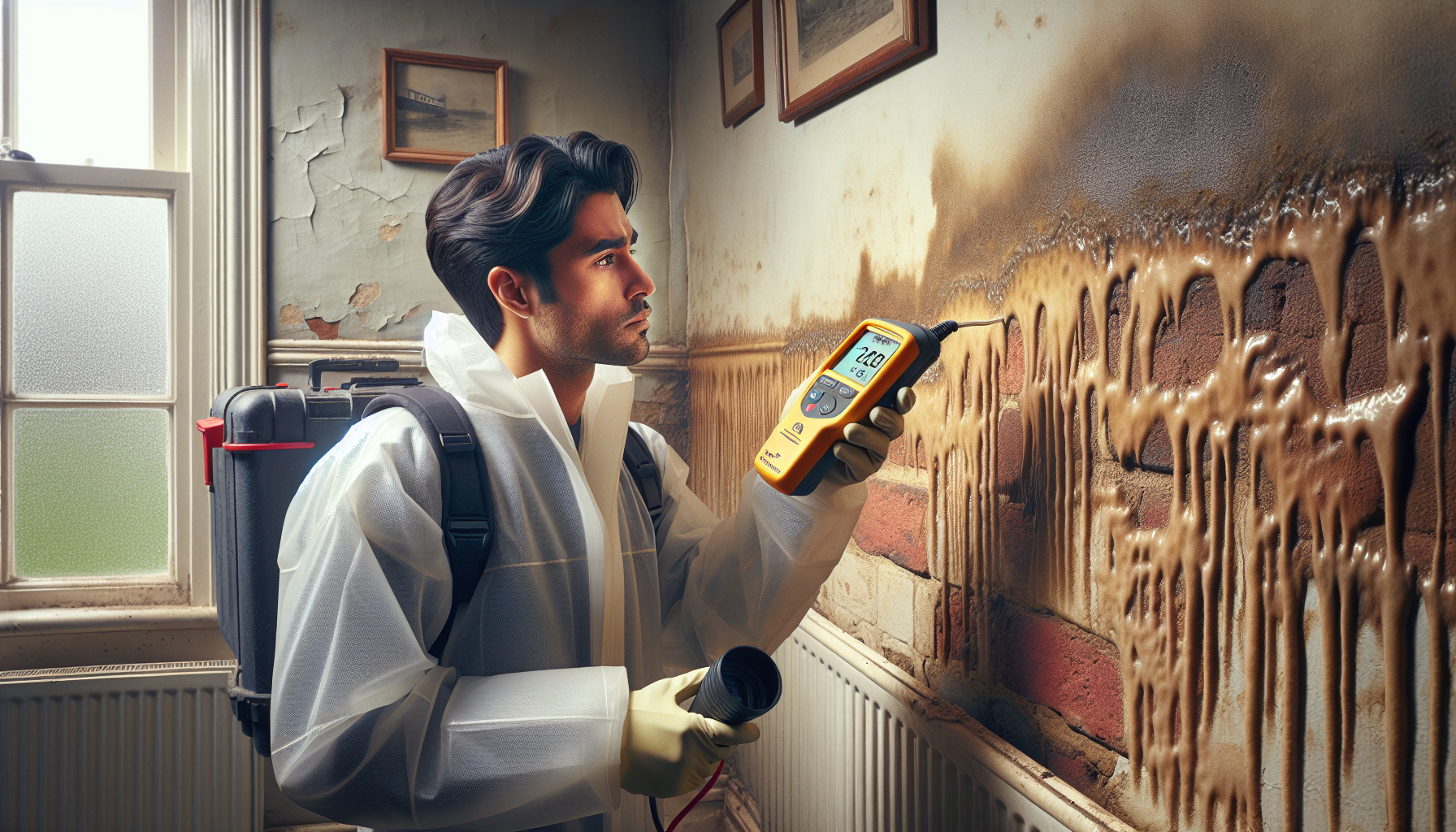
- Rising damp treatment — installing a new chemical damp proof course using injection cream or fluid. This is the most common single treatment. A typical semi-detached house treatment costs the customer £2,000 to £5,000 depending on the size of the affected area and whether re-plastering is included.
- Penetrating damp treatment — addressing external water ingress through walls, windows, or roofs. May involve repointing, external waterproofing coatings, or internal remedial work.
- Condensation and mould treatment — often the most misdiagnosed category. Proper treatment involves improving ventilation, insulation, and sometimes surface treatments, not just washing mould off walls.
- Structural waterproofing — tanking basements or below-ground spaces. More complex, requires specific qualifications (CSSW), and commands higher fees.
- Timber treatment — treating dry rot, wet rot, and woodworm. Often sold alongside damp treatment because the same conditions that cause damp also damage timber.
Most damp proofing businesses offer damp surveys as a standalone service — a paid diagnostic visit that produces a written report. These surveys are often required by mortgage lenders and solicitors during property transactions, which creates a reliable demand stream that isn't dependent on homeowners proactively noticing a problem.
Qualifications and accreditation
Damp proofing is an unregulated trade in the sense that there is no legal requirement to hold a specific qualification before you start work. However, the industry has well-established professional standards, and the most credible route to building a sustainable business involves earning those credentials.
PCA membership
The Property Care Association (PCA) is the main trade body for the damp proofing, waterproofing, and timber treatment industry. PCA member companies are assessed against quality standards and are covered by the Government's TrustMark scheme. Many mortgage lenders and solicitors specifically require work to be carried out by a PCA member company when dealing with damp survey reports on property transactions.
PCA membership is company-level. To qualify, you'll need to demonstrate technical competence (usually through individual qualifications), hold appropriate insurance, and pass a quality audit. Achieving PCA membership from the start, or as soon as practicable, is the single biggest credibility boost for a new damp proofing business.
Individual qualifications
The main individual qualifications recognised in the industry are:
CSRT (Certificated Surveyor in Remedial Treatment) — this is the core qualification for damp and timber surveyors. It covers the identification and diagnosis of dampness, timber decay, and associated defects, and the specification of appropriate treatments. Awarded by the PCA. This is what enables you to produce credible survey reports.
CSSW (Certificated Surveyor in Structural Waterproofing) — this qualification is required for anyone carrying out structural waterproofing design and specification, particularly basement waterproofing under BS 8102. Without a CSSW, you should not be designing waterproofing systems.
The PCA training and qualifications page lists all available courses and routes. The PCA also works with CITB on accredited training for damp and timber technicians, which means CITB-registered employers can claim grants toward training costs.
Note that CSRT and CSSW qualifications are not a legal requirement, but the market treats them as the baseline expectation for credible survey work. A report signed off by someone without a CSRT won't carry weight with a mortgage lender or solicitor. If you're planning to offer survey services — which is where much of the profitable work sits — these qualifications are effectively essential. — try our free profit margin calculator
CSCS card
For site work, you'll need a CSCS card. The appropriate card type depends on your qualifications — check the CSCS website for the correct card for your occupation. This is required for access to most construction sites.
Equipment and start-up costs
One of the advantages of damp proofing relative to other specialist trades is that the equipment costs are modest compared to, say, heat pump installation or groundworks.

Diagnostic equipment
- Protimeter or equivalent moisture meter — essential for surveying. A good protimeter costs £150 to £400. Digital models that store readings and export to reports are worth the extra cost if you're doing regular surveys.
- Thermal imaging camera — useful for identifying cold bridges and hidden condensation patterns. Entry-level cameras cost £500 to £1,500. Not essential initially but adds credibility and diagnostic accuracy.
- Hygrometer — for measuring air humidity and temperature, important for condensation diagnosis.
Treatment equipment
- DPC injection equipment — either an injection pump (for low-pressure cream injection) or a high-pressure system for fluid injection. A basic pump setup costs from £200 to £600. Professional systems cost more.
- Drill and drill bits — a good SDS drill and a set of long masonry drill bits for injection holes. Budget £300 to £500 for quality tools.
- Mixing equipment — for render and re-plastering work. A drill mixer, buckets, and floats.
- Timber treatment sprayers — for applying fungicides and insecticides to affected timber. A basic garden sprayer works for small jobs; a dedicated low-pressure sprayer for larger treatments.
Van
A medium-sized van — Transit or equivalent — is the standard setup. You'll be carrying materials, a mixer, tools, and occasionally specialist equipment like dehumidifiers for drying-out work. Budget £15,000 to £30,000 for a decent second-hand van in good condition. Sign-writing the van with your company name and contact details adds professionalism and passive marketing.
Materials
DPC injection cream is your main consumable. Current material costs are approximately £10 to £17 per linear metre for the cream itself. You'll also need re-plastering materials (sand, cement or lime depending on the substrate), waterproofing renders, and timber treatment products. Keep initial stock modest and order as needed until you understand your typical job types.
Total initial outlay for equipment and stock, not including a van, is typically £5,000 to £15,000 for a sole trader set-up. Including a van, allow £20,000 to £45,000 to get properly set up.
What to charge
Damp proofing pricing is job-specific, but here are the current market rates in 2026:
Invoice your customers in 30 seconds
InvoiceAdept helps UK tradespeople send professional invoices, track payments, and stay MTD-compliant — all from your phone.
Start for free — no card needed- Damp survey: £150 to £350 for a residential property survey with written report. Some businesses absorb this into the treatment cost if the customer proceeds.
- DPC injection for rising damp: £50 to £70 per linear metre, plus re-plastering if included (£300 to £500 per room additional)
- Full rising damp treatment on a semi-detached house: £2,000 to £5,000 all-in
- Basement tanking: highly variable, typically £3,000 to £10,000+ depending on size and system specified
- Timber treatment (dry rot): highly variable depending on extent. Minor treatment from £500; significant structural dry rot remediation from £3,000 to £15,000+
Always produce a clear, written quote before starting work. Damp proofing involves hidden defects that aren't always visible at survey stage. Use your quote to define what's included, what the contingency rate is for additional work uncovered during treatment, and what your guarantee covers.
A quote generator helps you produce consistently professional, clearly itemised quotes quickly. On damp work particularly, a well-structured quote that clearly explains what is being treated and why builds customer confidence and reduces scope disputes.
Finding customers
Property surveyors and solicitors
The single best referral source for damp proofing work is the property transaction chain. When a homebuyer's survey flags damp, the buyer's solicitor or the surveyor will often recommend they get a specialist damp survey before exchange. Building relationships with local RICS surveyors and conveyancing solicitors means you receive referrals from every flagged property in your area.
This requires building trust — these professionals are recommending you to their clients. Make sure your reports are well-written, your qualifications are in order, and your PCA membership (if applicable) is prominently displayed.
Online directories
Checkatrade, TrustATrader, and Which? Trusted Traders are all used by homeowners searching for damp specialists. Getting reviews from early customers is important — a new profile with no reviews is hard to compete with established listings.
Local lettings agents and property management companies
Landlords are required to maintain properties free from damp and mould under the Homes (Fitness for Human Habitation) Act 2018. Lettings agents managing landlord portfolios need reliable damp specialists they can call when tenants report problems. One relationship with a lettings agent managing 100 properties can provide a regular flow of reactive work.
Estate agents
Similar to solicitors, estate agents sometimes recommend damp surveys when a property comes to market with visible damp issues. A quick, professional response to an estate agent referral often leads to a long-term relationship.
Running the business
Guarantees and warranties
Most damp proofing companies offer guarantees on their work — typically 10 to 25 years for DPC injection and 30 years for structural waterproofing. This is a selling point but also a liability. Make sure your guarantee terms are clearly written, specify what they cover (the treatment itself, not structural or cosmetic issues unrelated to damp), and keep clear records of every job in case claims arise years later.

PCA members' guarantees can be backed by the PCA's insurance-backed guarantee scheme, which provides additional security to customers and is a significant marketing advantage.
Insurance
Public liability insurance — minimum £2 million, ideally £5 million — is essential. Because you're producing survey reports that customers and third parties (mortgage lenders, solicitors) rely on, professional indemnity insurance is also important. If a survey report you produced is later found to have missed a defect, you need cover for the resulting claim.
Invoicing and cash flow
Damp proofing jobs are typically completed over one to three days with full payment on completion or shortly after. Survey reports are usually paid upfront or on delivery of the report. This means cash flow is relatively predictable compared to longer-contract trades — but getting payment promptly matters.
Issue invoices on the day of job completion. An invoice generator lets you produce professional, clearly itemised invoices quickly from your phone or laptop on site, referencing the original quote and specifying your payment terms. Setting up automated payment reminders for any invoices that aren't paid within your stated terms keeps cash moving without awkward phone calls.
If you're quoting work and want to understand whether your pricing covers your costs properly, use a day rate calculator to factor in travel time, materials, guarantee liability, and administration, not just the hours on site.
Frequently asked questions
Do I need qualifications to start a damp proofing business?
There is no legal requirement to hold specific qualifications before offering damp proofing services in the UK. However, for survey work — particularly reports used in property transactions — the CSRT qualification is the accepted industry standard. Without recognised qualifications, mortgage lenders and solicitors may not accept your survey reports, which limits the most profitable part of the market.
What is the difference between a damp survey and a damp treatment?
A damp survey is a diagnostic inspection of a property to identify the source and extent of any dampness. It produces a written report with recommendations for treatment. A damp treatment is the physical remediation work — injecting a new damp proof course, applying waterproofing render, treating affected timber, and so on. Good damp businesses often carry out both, charging separately for the survey and treatment.
Is PCA membership essential?
PCA membership is not legally required, but it is increasingly expected by mortgage lenders and solicitors, and it provides access to the government's TrustMark scheme. For new businesses, PCA membership signals credibility and competence to customers who might otherwise not know how to assess competing quotes. It is worth working toward from the start, even if it takes time to qualify.
What are the most common types of damp I will deal with?
The most common types are rising damp (moisture moving up from the ground through walls due to a failed or absent damp proof course), penetrating damp (rain or external moisture entering through walls, roofs, or around windows), and condensation (warm moist air meeting cold surfaces, producing mould and surface moisture). Each requires a different diagnosis and treatment. Misdiagnosing the type is the most common mistake in the industry and the main reason for failed treatments.
Can I offer damp proofing guarantees as a new business?
You can offer guarantees, but they are only as good as the company behind them. A new business with no financial track record offering a 20-year guarantee has limited practical value to a customer. As you grow and establish the business, joining a guarantee-backed scheme such as the PCA's insurance-backed guarantee programme adds genuine weight to the guarantees you offer. In the meantime, be clear about what your guarantee covers and for how long.
Ready to get started?
InvoiceAdept helps UK tradespeople send invoices, track payments, and stay compliant — all from one place.
Start for freeNo credit card required